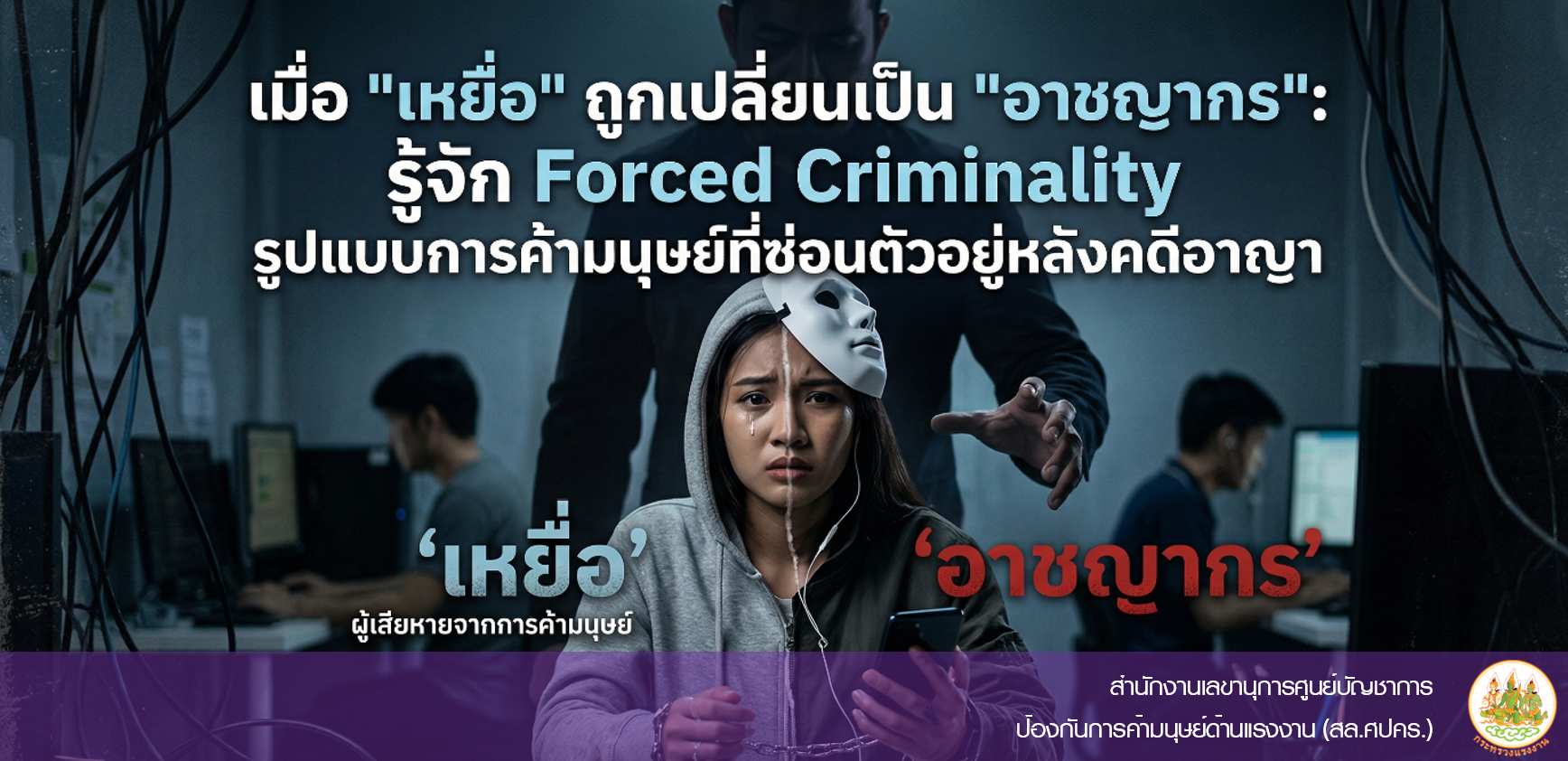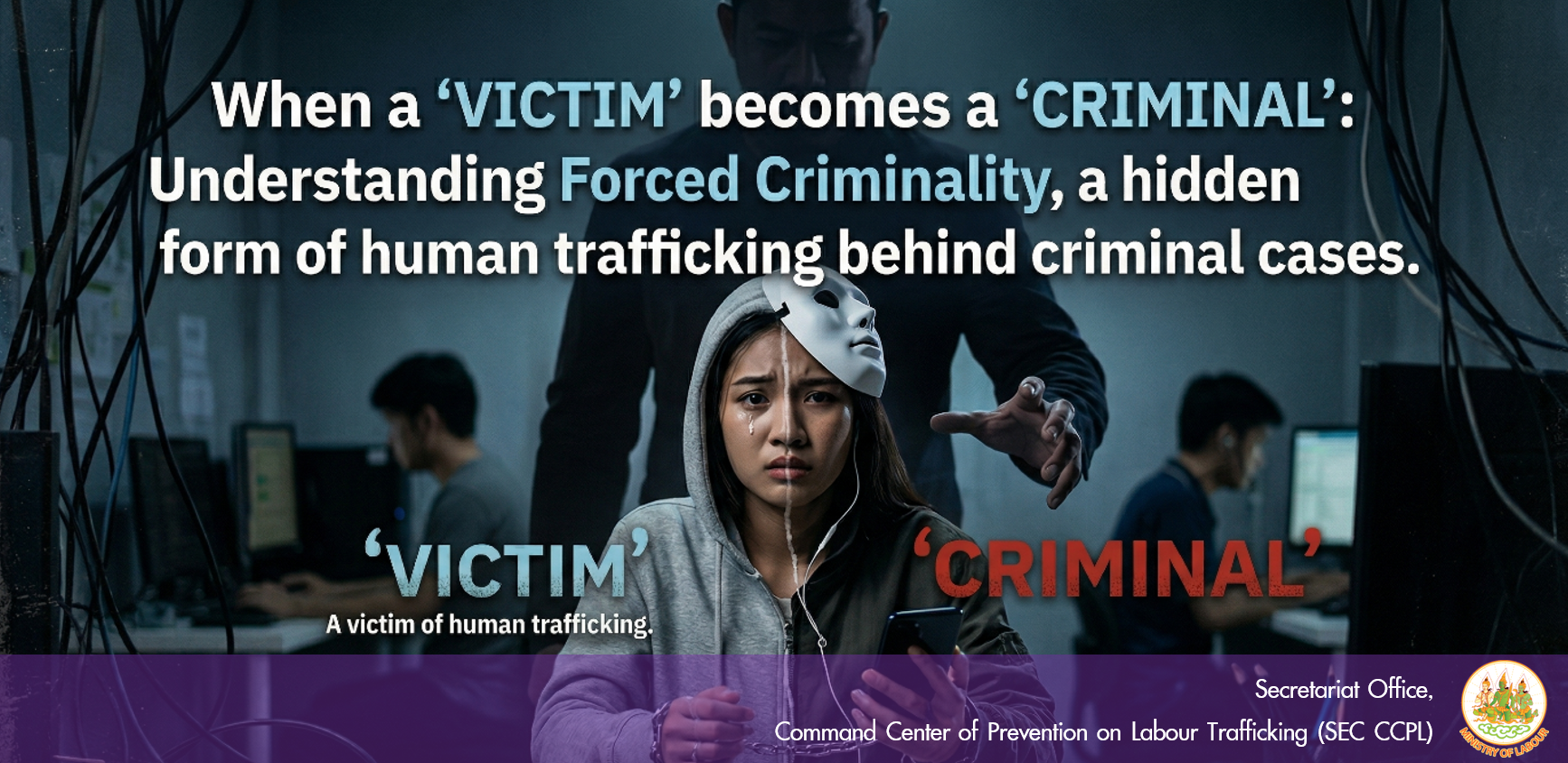



When “Victims” are Turned into “Criminals”:
Understanding Forced Criminality, the Human Trafficking Hidden Behind Criminal Cases
When talking about “human trafficking” or “forced labor,” most people’s immediate thought is grueling work in sweatshops or forced prostitution. However, in the digital age, this threat has evolved into a much more complex and dangerous form: “Forced Criminality.” This is a rapidly growing form of human trafficking that is causing widespread impact, particularly in our region.
What is Forced Criminality?
Forced Criminality is a process where transnational criminal syndicates deceive, coerce, and force individuals into participating in illegal activities. The most prominent examples we see today are the “Scam Centers” proliferating along the borders of neighboring countries, as well as forced drug smuggling and other cybercrimes.
From “Hope” to a “Trap”
These syndicates usually begin with subtlety. They do not simply kidnap victims off the streets; instead, they rely on “Deception” by offering seemingly attractive overseas job opportunities with high incomes and enticing benefits.
But once the victims arrive, the nightmare begins…
Confiscation of Identity Documents: Passports and ID cards are immediately seized.
Restriction of Freedom: Victims are confined in heavily guarded buildings.
Intimidation and Physical Abuse: If they fail to meet their scamming quotas or attempt to escape, they are subjected to physical and psychological torture.
Debt Bondage: The syndicates fabricate travel and living expenses to coerce the victims into working off a never-ending debt.
The Blurred Line Between “Criminal” and “Victim”
The greatest challenge in handling Forced Criminality cases is that when these criminal hubs are raided, the individuals found inside are often immediately viewed as “perpetrators” in the eyes of the law.
What officials and practitioners must prioritize is the Non-Punishment Principle, which dictates that victims of human trafficking should not be penalized for unlawful acts they were compelled to commit. Accurately screening and separating victims from criminals is the heart of the matter. We can utilize the International Labour Organization’s (ILO) 11 Indicators of Forced Labour (such as deception, physical confinement, intimidation, and abusive working and living conditions) as a comprehensive framework for this assessment.
Solutions and Prevention
Tackling Forced Criminality cannot be accomplished by a single agency. It requires coordinated collaboration through effective referral systems and databases, both nationally and internationally to promptly track and assist victims.
For the general public, the best defense is “Awareness”:
Verify Before Believing: If an overseas job offer seems too good to be true, always verify it with the Department of Employment, Ministry of Labour.
Avoid Illegal Migration for Work: Traveling to work abroad must always be done through proper, legal channels to ensure you are protected by the law.
Report Suspicious Activities: If you encounter or suspect someone has fallen victim to forced criminality, notify the relevant authorities immediately.
“Because victims of human trafficking… need help, not a prison cell.” Understanding the complex dimensions of Forced Criminality is a crucial step in pulling victims out of a living hell and bringing the true masterminds to justice decisively.
Secretariat Office,
Command Center of Prevention on Labour Trafficking (SEC CCPL)